NeurotechEU strengthens its strategic direction with a Strategic Advisory Board
According to Van Krieken, the establishment of the board comes at a logical stage in NeurotechEU’s development. “As an alliance, we have spent the past few years building a strong foundation. Now it is time to look ahead: how do we increase our impact, how do we position ourselves in Europe, and how do we ensure that our knowledge truly makes an impact on society?”
A modern way of collaborating
Van Krieken, former Vice-Chancellor of Radboud University, was involved in the creation of NeurotechEU from the very beginning, when the idea of European university alliances was still in its infancy: “It began with Macron’s initiative to encourage Europe’s leading universities to collaborate in a different way,” he recalls. “Not everything in one place, but rather through networks – in my view, a modern way of collaborating. That idea ultimately appealed to me more and more.”
Initially, there was some reluctance in the Netherlands. “We thought: that’s complex; what exactly will this achieve?” says Van Krieken. “But when Tansu Çelikel came up with the proposal to organise a neurotechnology alliance, it clicked. That’s when we gained momentum: we can really tackle this together.”
Strategic Advisory Board
The members, drawn from sectors including high-tech, healthcare and international cooperation, advise the board on strategic decisions and help build bridges to social and economic applications. “What makes this group special is the combination of perspectives,” says Van Krieken. “We have people at the table who are used to operating outside the academic world, who think in terms of implementation and upscaling. That is exactly what NeurotechEU needs right now.”
The first meeting sparked a lively discussion about the unique position that NeurotechEU occupies and the areas in which this could be strengthened. In both the fields of education and research, there was support for the current approach and fascinating suggestions were put forward. Opportunities for translation into the business world were explicitly highlighted. Van Krieken looks back positively on this first meeting: “The great enthusiasm of the members of the SAB has surprised me and gives me confidence that this group is a valuable addition.”
Industry involvement
The involvement of the business community is essential in this regard. “We want to move away from the idea that education, research and application are separate worlds,” says Van Krieken. “If you want to make an impact, you have to think from the outset about where knowledge ends up: in products, in services, in policy. This council helps enormously in that regard.”
He also believes that the international composition of the SAB is a strength. “NeurotechEU is, by definition, a European project. It is therefore crucial to receive advice from people who understand that continental perspective whilst also thinking on a global scale.”
Ignacio Vallines (Siemens Healthineers), member of the SAB, shares this perspective: “As a member of the NeurotechEU Advisory Board, I would like to explore ways to bridge groundbreaking basic and applied research with potential contributions from the European MedTech industry. By doing so, I believe we can foster a robust European innovation ecosystem centered around this highly strategic field.”
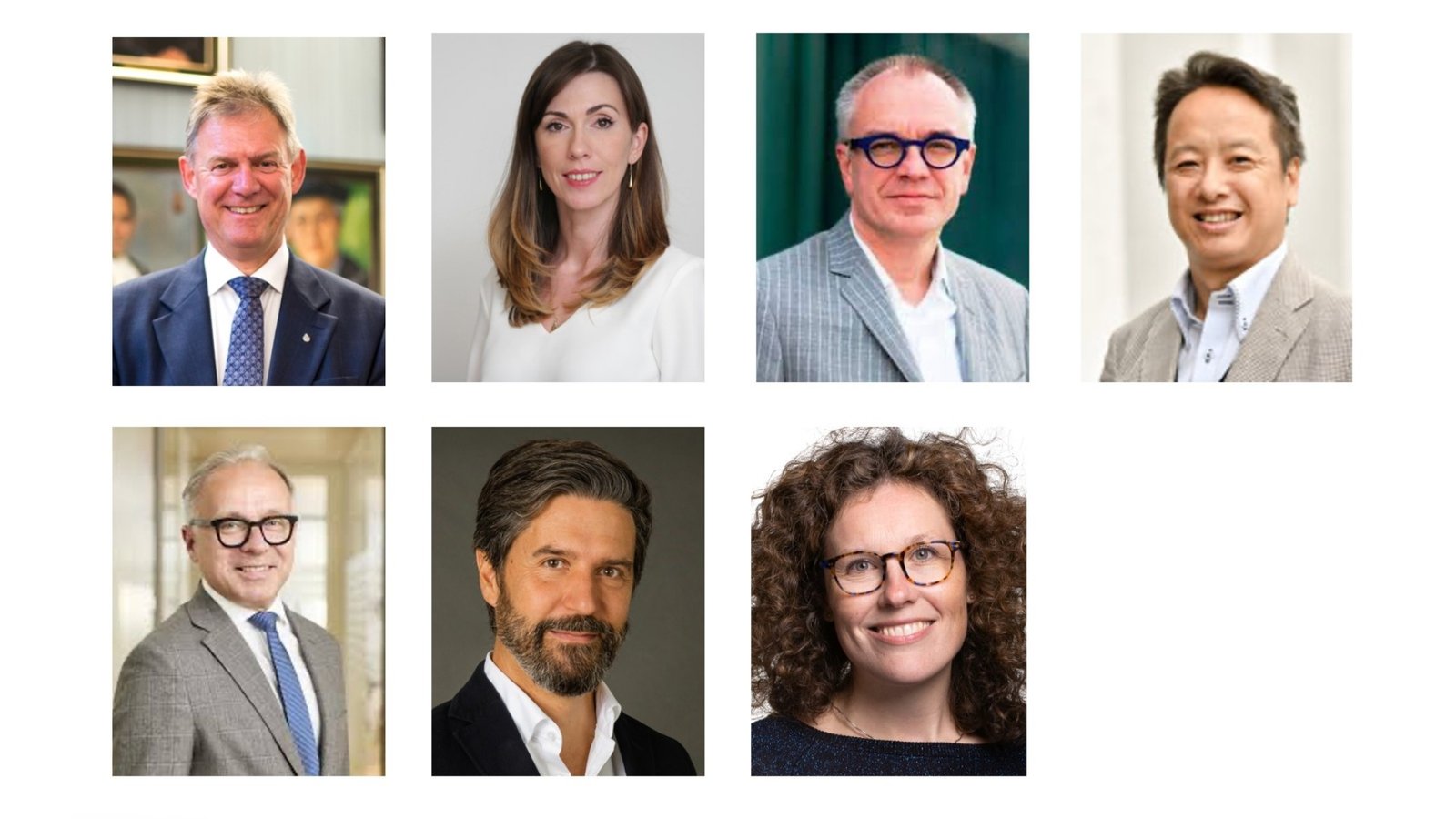
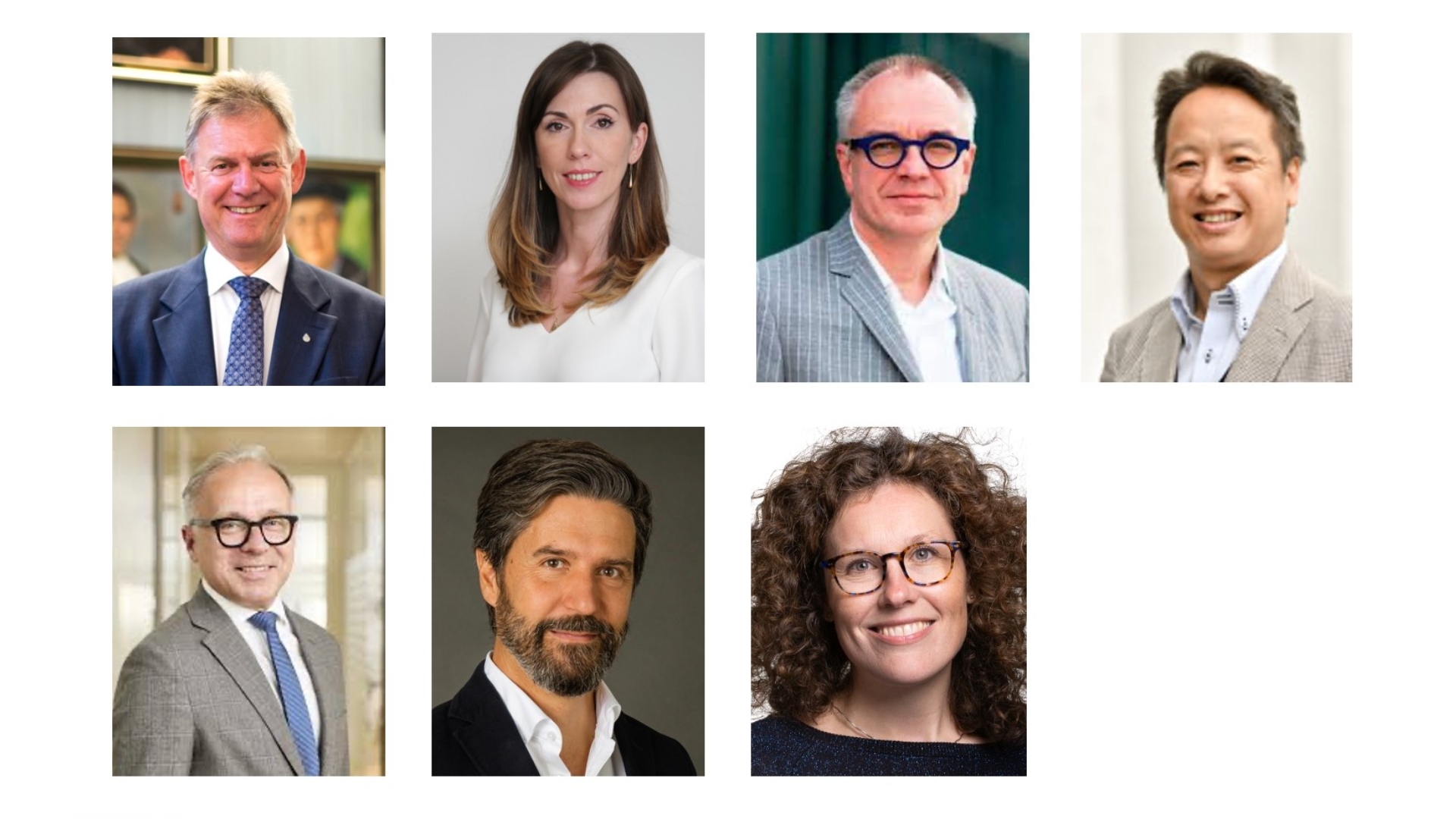
The full Strategic Advisory Board consists of the following members:
- Han van Krieken – Former Rector Magnificus of Radboud University (Chair)
- Irina Ferencz – Director of the Academic Cooperation Association
- Chris Van Hoof – Vice President R&D, imec
- Gordon Cheng – Professor of Cognitive Systems, Technical University of Munich (TUM)
- Paweł Świeboda – Senior Fellow for Neurotechnology, Centre for Future Generations
- Ignacio Vallines – Head of Scientific Partnerships EMEA, Siemens Healthineers
- Emily Palmer – Former Secretary General, Una Europa
Driving acceleration
The SAB will meet twice a year in the coming years to provide the Board with strategic advice. Van Krieken looks to the future with confidence: “For me, this is not a formal exercise, but an opportunity to truly drive acceleration. If we make good use of the strength of these people, we can play a much larger role as NeurotechEU in Europe and beyond.”