NeurotechEU Students Shape Europe at the European Student Assembly 2026
What does it take for student ideas to reach the European Parliament? At the European Student Assembly 2026 (ESA 2026), it begins with months of collaboration, discussions across disciplines, and a shared ambition to shape Europe’s future.
The ESA is not a traditional conference. It brings together hundreds of students from across Europe in a policy-making simulation grounded in real-world challenges, where participants develop concrete recommendations on key societal issues such as digital transformation, public health, and sustainability. The journey starts long before Strasbourg.
A European collaboration in the making
For NeurotechEU students, the experience began months in advance. Participants were grouped into thematic panels and worked online, meeting regularly and refining ideas together.
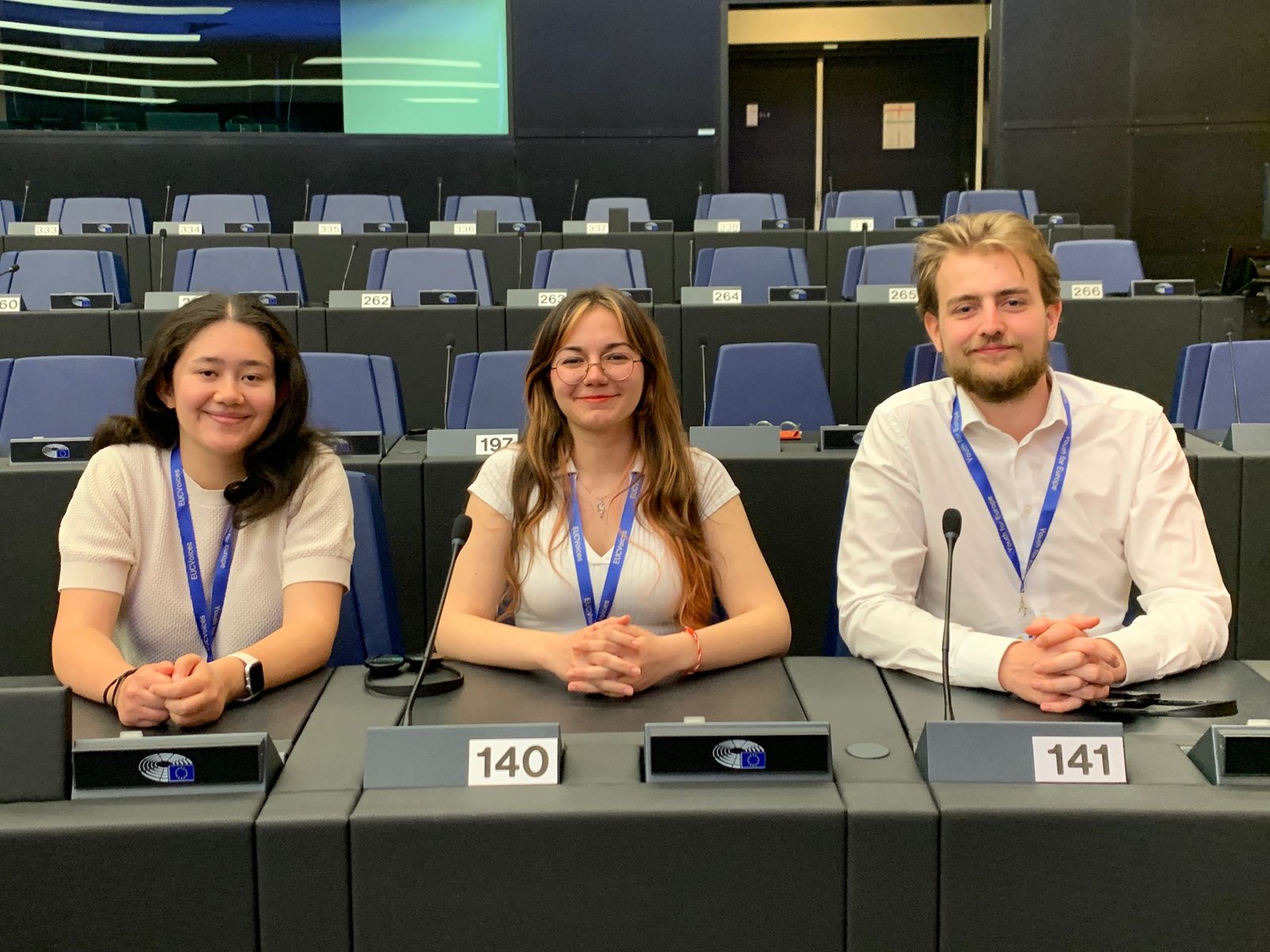
As Shirley Lidman, one of three NeurotechEU students, explains: “From January to April 2026, we worked online in groups to develop policy proposals, which were later finalised during the in-person assembly in Strasbourg.”
This preparation helped students build both knowledge and trust across disciplines and borders. İlayda Yenen highlights the importance of this phase: “Before ESA26, we had a four-month-long preparation period… I prepared by reading the ESA materials, joining regular meetings, and following our shared documents so I could contribute actively.”
Stefán Magni Stefánsson describes the structured collaboration: “Each team member first worked on their own proposal, and later each team selected the strongest proposals to bring forward… After that, we continued improving them by getting feedback.”
Tackling Europe’s biggest challenges
The diversity of topics reflects the complexity of Europe itself. NeurotechEU students contributed to panels addressing major societal challenges.
İlayda worked on digital transformation: “We developed and refined three recommendations, including one on preventing skill loss and over-reliance in the age of AI, and another on combating digital stress linked to misinformation.”
Another panel focused on social cohesion: “Our work focused on loneliness as a public health issue… including proposals around systematic screening for loneliness in primary care.” Stefán contributed to sustainability discussions: “Panel 2… focused on scaling the circular economy and how the EU can overcome uneven progress across sectors and societies.”
Strasbourg: where ideas come to life
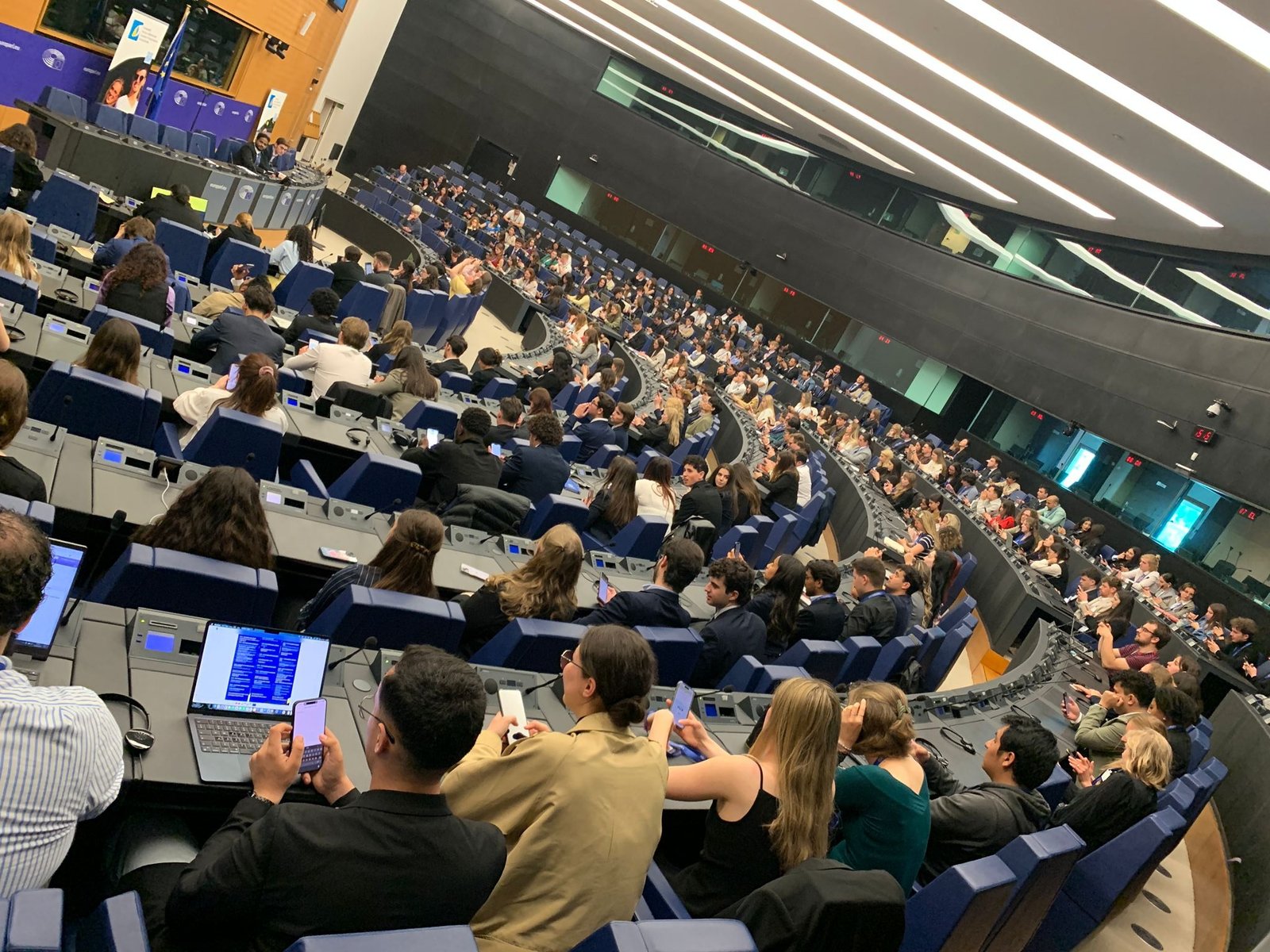
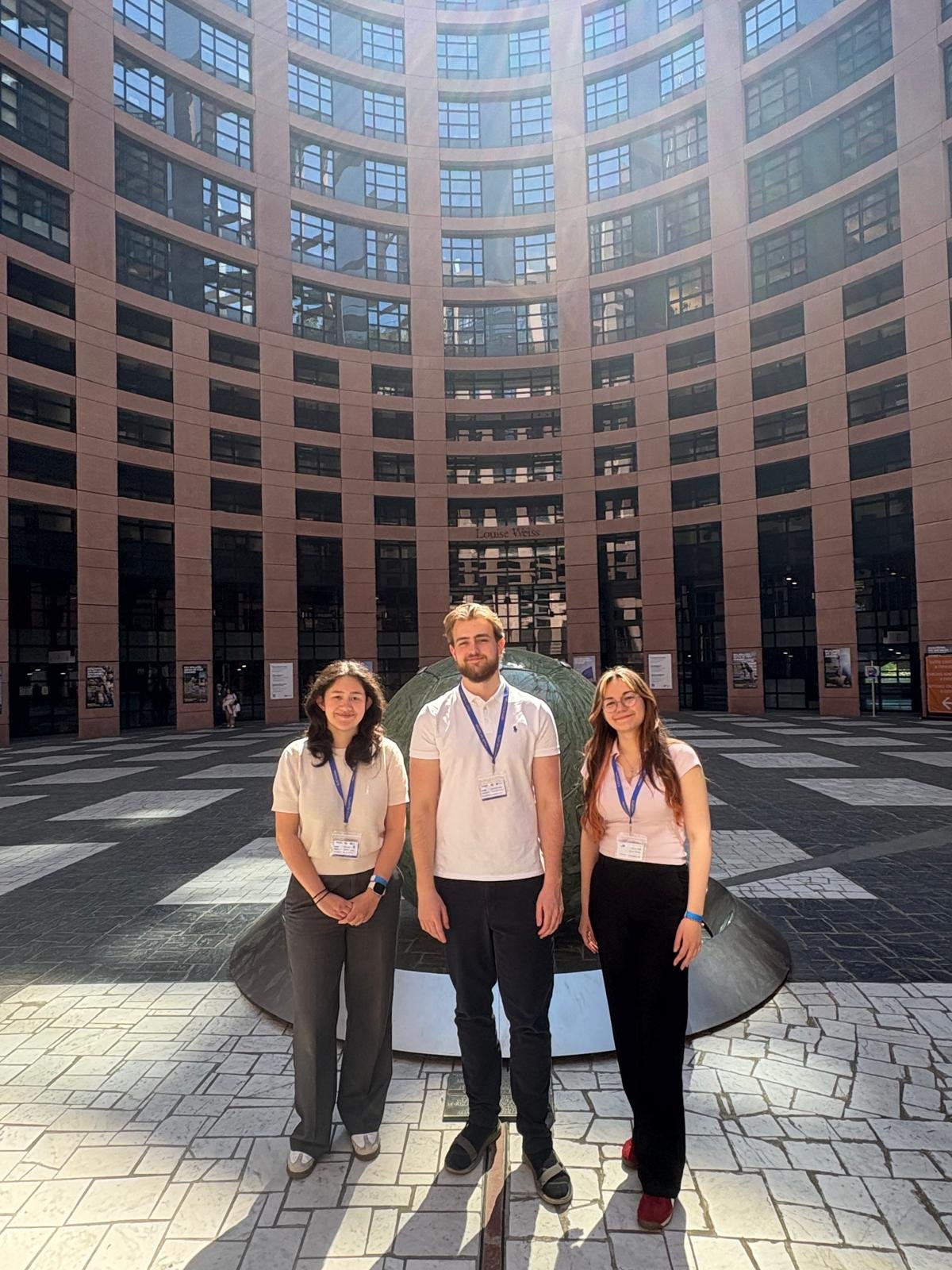
After months of collaboration, students gathered in Strasbourg to present and vote on their proposals in the European Parliament.
“It was a great pleasure to work in the European Parliament in Strasbourg. Being in that setting made the experience feel both meaningful and motivating,” İlayda says. Stefán adds: “Meeting in person felt more familiar, almost like we already knew each other.”
ESA provides more than policy experience. Students gain skills in policy writing, negotiation, and cross-cultural communication.
“Beyond my field, I gained skills in policy writing, negotiation, and communicating complex topics effectively,” İlayda explains. The experience also broadened perspectives: “It made me realize how different people can be as individuals… and how important it is not to rely too much on simple stereotypes about countries,” Stefán says.
A stronger European perspective
By the end of the assembly, many participants felt a stronger connection to Europe.
“I left Strasbourg feeling more connected to the European community and more confident about how student voices can shape policy conversations,” says İlayda. Shirly summarizes the experience: “I am grateful… for the opportunity to take part in ESA and contribute to a wider European exchange of ideas.”
More than an event
For NeurotechEU students, ESA 2026 was more than an academic exercise. It was a hands-on experience of European cooperation, combining collaboration, policy-making, and meaningful connections. Stefan concludes: “Overall, it was a wonderful experience, and I would definitely do it again.”