
NeurotechEU in Brussels: “Europe must shape neurotechnology with European values”
“Brussels always hits differently,” Vlek de Coningh reflected. “It absolutely crucial that technologies interacting with the brain are developed in Europe, rooted in European values. Because when you talk about the brain, you are talking about the most intimate aspects of the human experience.”
European Strategy for Neurotechnology
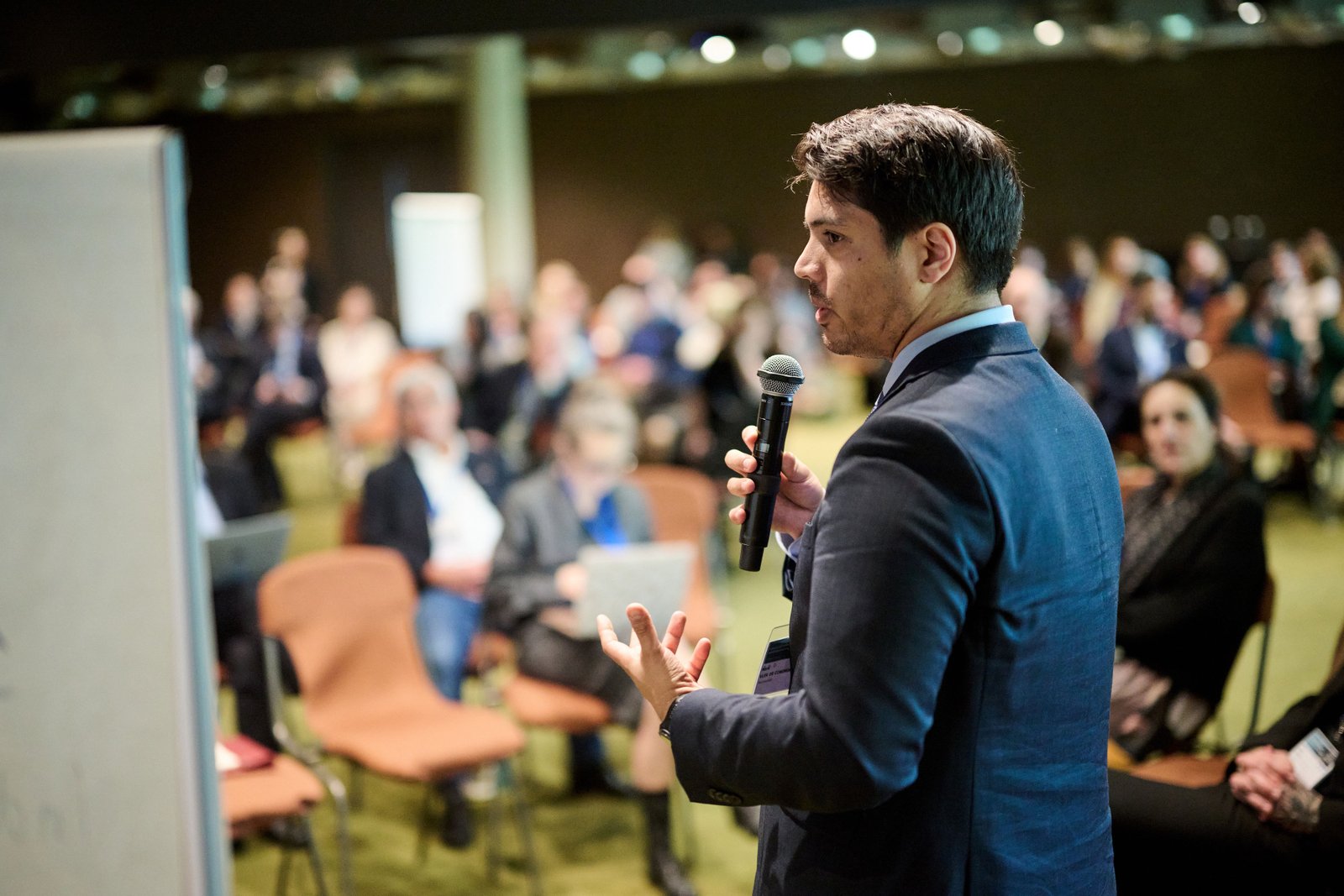
Vlek de Coningh participated in a session organised by the Centre for Future Generations (CFG) and the European Brain Council (EBC), hosted by the European Economic and Social Committee. The event marked the launch of a new whitepaper arguing for a European Strategy for Neurotechnology.
“Across the globe we see massive investments in neurotechnology,” he noted. “In the US, strong capital markets help innovations scale quickly. In China, the state can decide overnight to invest billions. Europe works differently – and that is not a weakness, but it does mean we need a clear strategy.”
In his contribution, Vlek de Coningh highlighted NeurotechEU’s role in strengthening Europe’s neurotechnology ecosystem through education and research. “Europe already has outstanding universities,” he said. “What we need are people who can bridge neuroscience, biology, engineering and computer science – and who understand ethical responsibility, privacy and societal impact. That is exactly what we are training in NeurotechEU.”
He stressed that regulation, while essential, must go hand in hand with innovation. “Europe is very good at setting rules for data protection and medical devices, and we need those rules. But we also have to make sure they don’t unintentionally block innovation before it can reach patients or society.”
European Universities Alliances
One day later, Vlek de Coningh addressed coordinators of European Universities Alliances at a meeting organised by the European Commission. Here, the focus shifted to competitiveness and deep‑tech ecosystems.
“University alliances can connect the full knowledge pipeline,” he explained. “From fundamental research to education, and from there to companies and capital. Neurotechnology is a perfect example of a deep tech where no single institution can succeed alone.”
He also underlined the broader societal relevance of neurotechnology. “We are facing ageing societies and increasing neurological disorders such as Alzheimer’s and Parkinson’s. Neurotechnology can help improve quality of life, reduce healthcare costs, and keep societies resilient. Beyond healthcare, brain‑inspired technologies also hold enormous promise for energy‑efficient computing and AI.”
For Vlek de Coningh, NeurotechEU embodies the European approach. “This alliance brings together universities from Lille to Reykjavik, from Istanbul to Innsbruck. Every time I visit Brussels, I am more convinced of what this collaboration can contribute to European health, economy and society.”
Call to shape Europe’s neurotech future
He concluded with a clear call to action directed at European education, research and innovation policymakers. “The European Commission plays a decisive role he said. “If Europe is serious about neurotechnology, it needs strong, trusted networks that combine education, research and innovation with European values. The commission is working on its Multiannual Financial Framework right now and has an opportunity to shape the conditions for alliances like NeurotechEU to build those networks. We stand ready to contribute.”
The newly published CFG–EBC whitepaper on a European Strategy for Neurotechnology offers concrete recommendations for the years ahead. As developments accelerate, events like these underline one core message: Europe must not only adopt neurotechnology, but actively shape it together.
More information
If you would like to learn more about European organisations mentioned above, visit their websites: