
Campus +: Neuromorphic computing
The European University of Brain and Technology –NeurotechEU; partners are unlocking the potential of neuromorphic computing by translating the brain’s complex network into innovative, energy-efficient computing infrastructures. With that in mind, NeurotechEU has defined the Neuromorphic computing as one of the eight dimensions that define the scope of current and future research, education, and applications in neurotechnology.
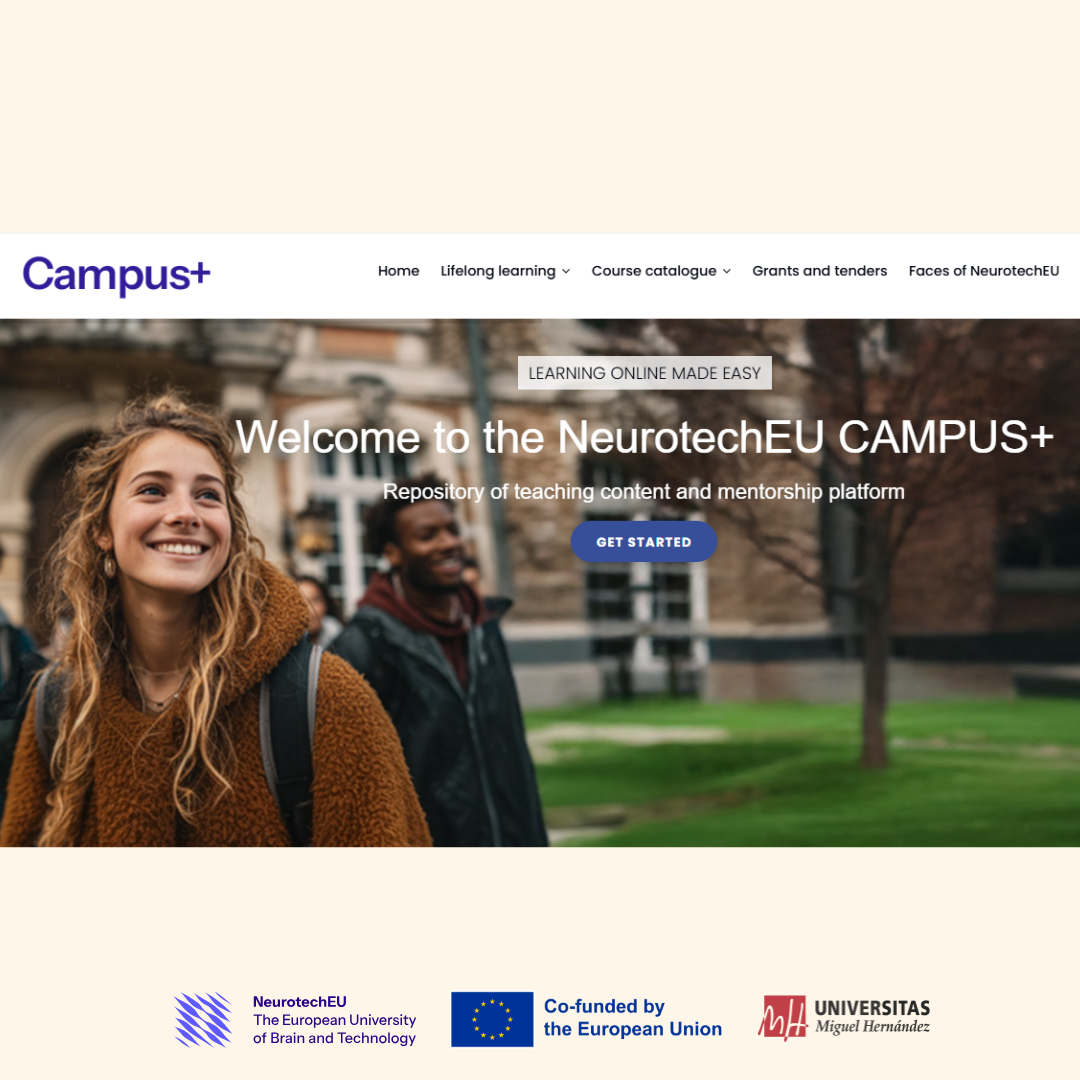
The NeurotechEU platform Campus + collects different courses on neuromorphic computing. This dimension refers to building computer systems that mimic how the brain processes information.
Courses on Campus + regarding the Neuromorphic computing dimension:
Introduction to neuromorphic devices:
- This one-lesson course introduces the use of specialized hardware which either directly mimics brain function or is inspired by some aspect of the way the brain computes to Neuroscience for Machine Learners -Neuro4ML. With this course, participants will learn bout power consumption and the limits of standard computational hardware.
- This medium-level course introduces computational architectures that mimic some aspect of the way the brain works. This course gives an overview of some of the most common features that have been tried to design neuromorphic computing devices.
Brain for neuromorphic computing:
- Neuronal model standardization, Evolution of model development and standards, and Neural plasticity models are some of the topics covered in this one-lesson course for beginners. This course introduces the Brian Neural Simulator, an open-source simulator for spiking neural networks.
What is Campus+?
The NeurotechEU platform, Campus+ serves as a dynamic repository of teaching content, offering a collection of courses from all NeurotechEU partner institutions. With contributions from eight universities, the platform ensures that learners gain access to cutting-edge content across diverse fields of neurotechnology. It also acts as a mentorship hub, connecting students with experts in their disciplines, facilitating knowledge transfer, and nurturing innovation.